The Unspoken Curriculum: Decoding the Social Rules of School Pickup in New Canaan
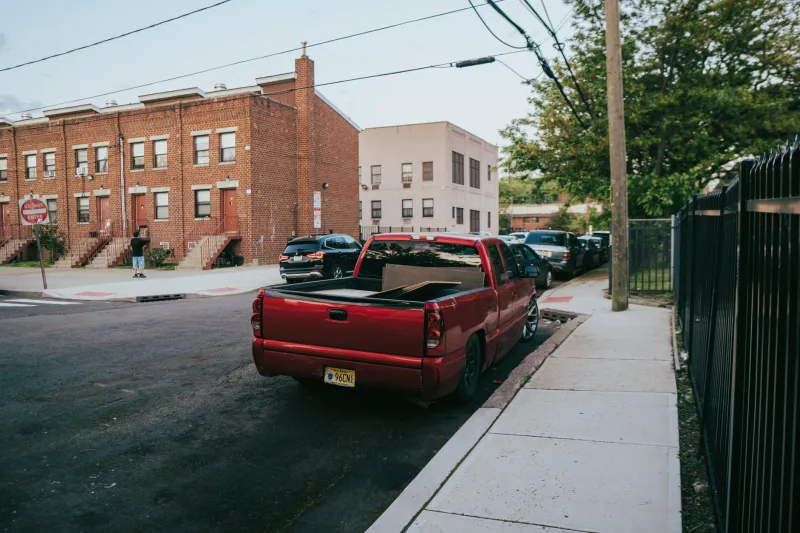
At approximately 3:15 on any given weekday afternoon, something remarkable happens along the streets bordering New Canaan's elementary schools. A loose convoy of vehicles — predominantly large SUVs, the occasional Tesla, and a smattering of practical sedans driven by people who have either transcended status anxiety or simply have not yet absorbed it — begins assembling with a precision that no municipal ordinance has ever managed to legislate. The drivers know where to go. They know how long to wait. They know, above all, what not to do.
No handbook governs this ritual. No orientation session covers it. And yet, within a matter of weeks, most parents figure it out — or quietly absorb the social cost of not doing so.
"I pulled into the wrong spot my first week," recalled one mother who moved to New Canaan from Westchester County two years ago and asked to remain anonymous, citing what she described as "residual parking lot trauma." "I didn't even know it was the wrong spot. There were no signs. But the look I received from the woman behind me communicated everything a sign ever could."
The Hierarchy Nobody Admits Exists
Speak with enough New Canaan parents about afternoon pickup, and a consistent portrait emerges: a social architecture that is simultaneously warm and stratified, welcoming and territorial, completely informal and rigorously enforced.
At the top of the informal hierarchy sit the veterans — parents who have been rotating through the same pickup lines for five or more years and have, through sheer accumulated presence, established an almost proprietary relationship with certain parking spaces, certain conversational clusters, and certain unspoken privileges. They arrive at the same time every day. They know the names of the crossing guards. They have strong opinions about the traffic cone placement.
Below them, in a layer that is fluid and constantly renegotiating itself, are the mid-tenure parents: people who have been around long enough to know the rules but not quite long enough to make them. These are the parents who will gently redirect a newcomer who has inadvertently blocked the carpool lane, doing so with a smile calibrated precisely to communicate helpfulness rather than reproach.
And then there are the newcomers — identifiable, veterans say, by a particular combination of uncertainty and over-compensation. They arrive too early or slightly too late. They park where they should idle. They idle where they should park. They wave enthusiastically at people who were not waving at them.
"There is absolutely a learning curve," said one father who has navigated New Canaan's pickup ecosystem across three different schools over seven years. "But it's not malicious. It's just that nobody ever thought to write it down because everyone assumed it was obvious. And it is obvious — once you know it."
The Windshield as Social Frontier
Perhaps no element of the pickup experience generates more nuanced commentary than the question of in-car behavior. To exit the vehicle or remain inside it is, in New Canaan's afternoon parking lots, a decision that carries genuine social weight.
Exiting the vehicle signals availability — a willingness to engage, to linger, to participate in the sidewalk conversations that frequently extend fifteen minutes past the moment a child has been successfully loaded into a back seat. It is, by most accounts, the faster path to social integration. Parents who exit their cars regularly are more likely to receive dinner party invitations, join informal weekend plans, and learn which pediatric dentist everyone actually uses.
Remaining in the vehicle, by contrast, can communicate efficiency, introversion, an unusually demanding work schedule, or some combination of all three. It is not socially penalized in any explicit way. But longtime observers note that the parents who never emerge from their cars tend to remain, for longer periods, on the outer edges of the community's informal social networks.
"The parking lot is genuinely where a lot of the town's social connective tissue gets built," observed one school administrator who has watched the daily ritual for over a decade. "People think of it as just logistics. But it is also, whether anyone intends it or not, a community space."
The Carpool Compact
If solo pickup represents the introductory level of the afternoon social game, the carpool represents its advanced seminar. Coordinating a carpool in New Canaan requires a level of diplomatic precision that many parents describe, only partly in jest, as the most complex negotiation they conduct in a given week.
The variables are numerous. Whose car is used, and on which days, establishes an implicit accounting of obligation and reciprocity. The question of which child is dropped off first — and whether that order reflects geography, hierarchy, or some unspoken assessment of whose time is more valuable — is one that carpool participants frequently think about and rarely discuss directly. Snack provision, music selection, and the handling of sibling conflicts that erupt in the back seat all fall within the carpool's unwritten jurisdiction.
"My carpool has its own culture at this point," said one mother of three who has participated in the same arrangement for four years. "We have rules we never agreed to out loud. We just... arrived at them. Honestly, it functions better than some committees I've been on."
What the Ritual Reveals
Strip away the humor, and what the school pickup culture in New Canaan ultimately reflects is something both mundane and meaningful: the way a community negotiates belonging in the spaces between its official institutions.
The town's schools provide the structure. The parents provide the texture. And the parking lots, the sidewalks, and the idling lines of vehicles serve as the daily forum where New Canaan's social identity is quietly, incrementally constructed.
For newcomers, the advice from veterans is consistent, if slightly paradoxical: pay close attention, but do not appear to be paying close attention. Follow the rhythms of those around you. Exit your vehicle when the moment feels right. And if you inadvertently take someone's spot, a genuinely apologetic wave goes a long way.
"It sounds absurd when you describe it," acknowledged one parent who has lived in New Canaan for nearly a decade. "But these are the moments when community actually happens. Not at the town hall meeting. Not at the fundraiser. Here, in the parking lot, at 3:20 in the afternoon, when everyone is tired and a little distracted and just trying to get their kids home."
The bell rings. The doors open. And the performance, as it does every weekday, begins again.