Against the Current: The New Canaan Residents Who Commute the Other Way
Photo: Andre Carrotflower, CC BY-SA 4.0, via Wikimedia Commons
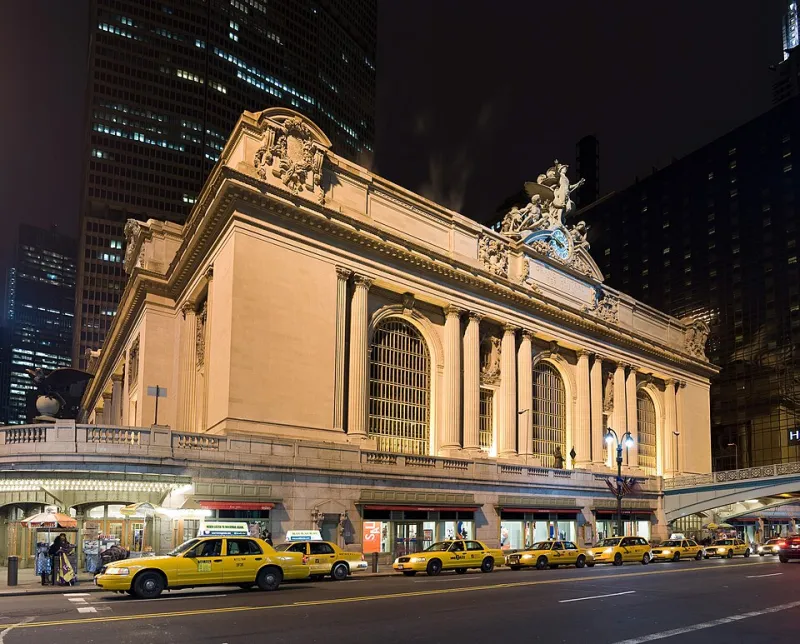
The narrative is familiar enough to feel like civic mythology. New Canaan resident wakes before dawn, walks to the train station, boards the 7:04 toward Grand Central, and arrives at a Midtown office tower in time for the morning's first meeting. The town's identity — its real estate values, its restaurant hours, its school pickup rhythms — has long been calibrated around this shared choreography.
But not everyone is moving in that direction.
A growing number of New Canaan residents begin their mornings by heading north, west, or deeper into Connecticut — toward pharmaceutical campuses in Stamford and Norwalk, technology firms in Greenwich's back-country office corridors, financial services headquarters scattered across Westchester County, and biotech clusters anchored along Route 1. These are the town's reverse commuters, and while they remain a minority in a place built around Metro-North, their numbers have been quietly rising for years.
They are, in their own understated way, outliers in a town that prizes a certain kind of belonging.
A Different Kind of Morning
For Sarah Kellerman, a senior project manager at a pharmaceutical firm in Norwalk, the commute runs about twenty-two minutes by car on a good day. She is typically at her desk before most of her New Canaan neighbors have reached Stamford on the train. The tradeoff, she says, is a morning that looks nothing like what her neighbors experience.
"There's no platform, no coffee cart, no familiar faces," she explains. "It's just me and Route 123 and whatever I've got playing on the radio. It's quiet in a way that took some getting used to."
That quietness is a recurring theme among reverse commuters interviewed for this article. Where the southbound train offers a kind of enforced community — the same faces, the same cars, the same conversations repeated across years — the drive north or west tends to be solitary. Some residents find that solitude clarifying. Others describe a subtle but persistent sense of disconnection from the social fabric that the commuter rail experience weaves through daily life.
Mark Thibodeau, who works in corporate finance for a firm headquartered in White Plains, New York, has lived in New Canaan for six years. He chose the town for its schools and its character, fully aware that his commute would run counter to convention. "I knew what I was signing up for," he says. "But you do feel it sometimes — the way the town's social life gets organized around the train schedule. Evening events, happy hours, dinner reservations. Everything is timed for people coming back from the city."
The Practical Arithmetic of Going the Other Way
Reverse commuting from New Canaan carries a distinct set of logistical advantages that its practitioners are quick to enumerate. Traffic, for one, tends to work in their favor. While Interstate 95 and the Merritt Parkway clog predictably with southbound and westbound traffic in the morning hours, those traveling northeast or into mid-Fairfield County often find the roads comparatively clear. The return trip, too, can be more forgiving — arriving home while the southbound commuters are still queued on platforms.
Parking costs are frequently negligible. Flexibility in scheduling is often greater. And for those whose employers are located on suburban campuses rather than dense urban cores, the work environment itself can feel less pressured, more spacious.
"I leave at 7:15, I'm parked and at my desk by 7:45, and I'm home by 5:30 most evenings," says one resident who works at a technology firm in Shelton. "My friends who go into the city leave earlier, get home later, and spend more money doing it. I understand the draw of New York, but the math just works differently for me."
The financial calculus extends further. Metro-North monthly passes from New Canaan to Grand Central represent a meaningful recurring expense. Reverse commuters who drive are absorbing fuel and vehicle wear costs, but many report that the overall comparison still favors their arrangement — particularly as parking costs in Midtown Manhattan have continued their long climb.
The Identity Question
New Canaan's relationship with Manhattan is not merely transactional. The city has long served as a source of cultural energy, professional identity, and social currency for many residents. Belonging to a community that commutes to New York carries a certain weight, and some reverse commuters acknowledge that their daily trajectory quietly separates them from that shared reference point.
Dinner party conversations about office buildings, neighborhood lunch spots, and subway delays are less immediately relevant. The shorthand that longtime commuters develop — an easy fluency in Midtown geography, in the rhythms of specific firms, in the unspoken codes of city professional life — is not part of the reverse commuter's vocabulary in the same way.
"It comes up more than you'd expect," says one resident who asked not to be named. "People assume you work in the city. When you say you don't, there's sometimes this pause. Not judgment exactly, but a recalibration."
Others are more sanguine. Several reverse commuters described their situation as quietly liberating — a way of participating in New Canaan life on different terms, less tethered to the city's pace and demands.
"I moved here because I love this town, not because I needed a launchpad to Manhattan," says Kellerman. "My work is here. My life is here. That feels right to me."
A Shifting Landscape
The growth of major employers across Fairfield and New Haven counties — in sectors including bioscience, financial technology, and corporate services — has expanded the range of professional destinations accessible from New Canaan without a trip south. At the same time, the normalization of hybrid work arrangements has blurred commuting patterns more broadly, creating a population of residents whose weekly trajectories are genuinely varied rather than fixed.
Town planners and local business owners have begun to take notice, if gradually. The assumption that New Canaan's working population is predominantly city-bound is increasingly imprecise. The reverse commuter cohort, while still outnumbered, represents a meaningful and growing slice of the town's professional life.
For now, they navigate their mornings largely without fanfare — merging onto the Merritt as their neighbors descend to the platform, arriving at offices that may never fully understand the community they've chosen, and returning home in time to collect children from school or catch the early part of an evening that most of their neighbors are still commuting toward.
It is, in its way, a different kind of New Canaan story. Less storied, perhaps, than the Grand Central narrative. But no less real, and no less rooted in the town they've decided to call home.