Generous Town, Unsolved Problem: How New Canaan's Philanthropic Identity Collides With Its Housing Insecurity Reality
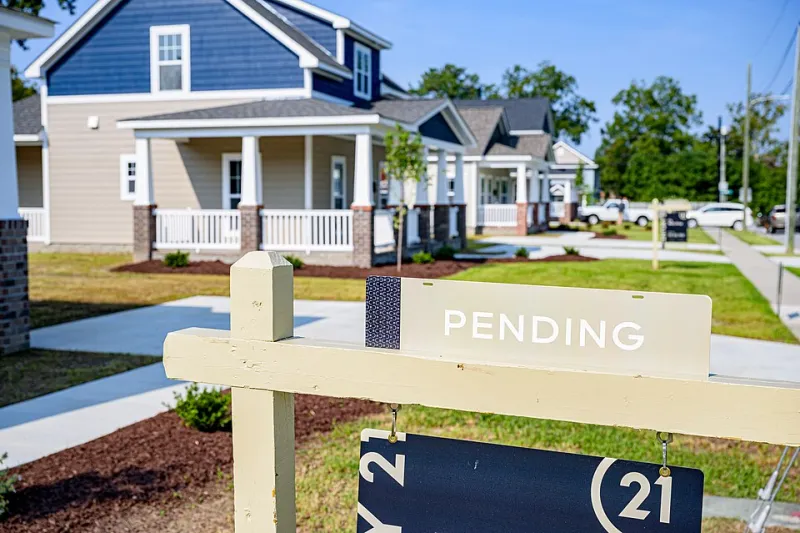
Photo: City of Greenville, North Carolina, Public domain, via Wikimedia Commons
New Canaan has long cultivated a reputation as a community that gives. Its residents fund hospital wings, endow university scholarships, and anchor the donor rolls of some of Connecticut's most prominent charitable institutions. Walk through the town's annual galas and benefit auctions, and the evidence of organized generosity is difficult to miss. Yet for a growing number of local advocates, social workers, and town officials, a troubling contradiction sits at the center of that philanthropic identity: New Canaan has not solved — and in some respects has not fully confronted — the problem of housing insecurity and homelessness within its own boundaries.
The gap between charitable intent and systemic outcome is not unique to New Canaan. Affluent communities across Fairfield County and the broader Northeast have wrestled for decades with the same tension. But in a town where the median home value exceeds $1.5 million and where volunteer culture is genuinely robust, the persistence of local housing insecurity carries a particular weight.
The Scope of a Problem That Resists Easy Measurement
Precise numbers are difficult to establish, in part because homelessness in communities like New Canaan rarely resembles the visible street-level crisis familiar to urban centers. Individuals experiencing housing insecurity here are more likely to be couch-surfing with relatives, living in vehicles, or cycling through short-term motel arrangements than sleeping in public spaces. This form of hidden homelessness complicates both data collection and public awareness.
The Neighbor to Neighbor organization, which operates across Fairfield County and maintains a presence serving New Canaan residents, has documented consistent demand for housing-related assistance. Staff members describe a client profile that surprises many residents: working adults, seniors on fixed incomes, and families with school-age children who have been priced out of rental options that simply no longer exist at accessible price points in the area. The town's own Point-in-Time counts, conducted as part of Connecticut's statewide homelessness assessment process, have periodically identified individuals in crisis, though advocates argue such snapshots undercount a population that actively avoids official detection.
"The invisibility of the problem is part of what sustains it," said one case manager familiar with New Canaan's social services landscape, who asked not to be identified by name to protect client confidentiality. "When residents don't see it, it becomes easier to assume it doesn't exist here."
Where the Philanthropic Model Falls Short
New Canaan's charitable infrastructure is, by most measures, impressive. The Community Fund of New Canaan distributes grants to local nonprofits each year, and individual donors regularly support organizations addressing hunger, mental health, youth services, and educational access. The generosity is real and it produces tangible results across multiple domains.
Housing, however, has historically occupied an awkward position within that giving ecosystem. Unlike food pantry support or scholarship funding — causes with clear, emotionally resonant narratives and measurable short-term outcomes — affordable housing development requires navigating zoning regulations, confronting property value anxieties, and committing to multi-year policy processes that don't lend themselves to gala program copy. The philanthropic model, built around annual campaigns and project-based giving, is structurally better suited to addressing symptoms than restructuring the conditions that produce them.
Town officials have acknowledged the challenge. New Canaan's Housing Authority administers a limited number of affordable units, and the town participates in Connecticut's Affordable Housing Appeals Act framework, which creates some legal obligation to consider affordable development proposals. But critics, including members of advocacy organizations that work regionally on housing policy, argue that the pace of progress has been insufficient relative to both the demonstrated need and the town's financial capacity.
"Philanthropy can fill gaps, but it cannot substitute for policy," said a regional housing advocate who works with municipalities across Fairfield County. "At some point, a town has to decide whether it wants to solve this problem structurally or manage it charitably — and those are genuinely different commitments."
The Zoning Dimension
No discussion of housing insecurity in New Canaan is complete without confronting the town's land-use environment. New Canaan's zoning regulations, like those of many affluent Connecticut municipalities, have historically favored large-lot single-family residential development — a pattern that has been well-documented as a contributor to regional housing scarcity and affordability pressures.
Efforts to introduce more diverse housing stock, whether through accessory dwelling unit provisions, multifamily zoning overlays, or inclusionary requirements attached to new development, have faced resistance in New Canaan as they have elsewhere. Proponents of such changes argue that they represent the most durable long-term response to housing insecurity. Opponents frequently cite concerns about neighborhood character, traffic, and school capacity — concerns that, whatever their individual merit, collectively function to preserve the exclusivity that makes the underlying problem so difficult to address.
The state of Connecticut has in recent years increased pressure on municipalities to demonstrate progress on affordable housing, and New Canaan has not been entirely immune to that pressure. But the distance between regulatory compliance and genuine community commitment remains, in the view of many advocates, considerable.
What Local Organizations Are Doing
In the absence of comprehensive policy solutions, a constellation of local and regional nonprofits has worked to address immediate needs. St. Mark's Episcopal Church has historically operated outreach programs serving vulnerable residents. Person-to-Person, based in Darien and serving multiple Fairfield County towns, provides emergency assistance that includes rent and utility support for individuals at risk of losing housing. The New Canaan Social Services Department serves as a critical navigation point, connecting residents in crisis to available resources — though staff there are candid about the limits of what emergency assistance can accomplish when the underlying housing supply is inadequate.
Several local advocates described a system that works hard but remains fundamentally reactive. "We can help someone stay in their apartment for another month," one service provider explained. "We cannot create affordable apartments that don't exist."
A Community in Conversation With Itself
What is perhaps most striking about the housing insecurity challenge in New Canaan is not the absence of concern but the difficulty of translating concern into consensus. Residents who contribute generously to food drives and mental health initiatives are not indifferent to the wellbeing of their neighbors. Many would likely express genuine discomfort at the notion that people in their community are sleeping in cars or unable to secure stable shelter.
The harder question is whether that discomfort is sufficient to motivate the specific policy changes — zoning reform, sustained affordable housing investment, regional cooperation — that structural progress requires. Charitable giving, for all its virtue, is ultimately a voluntary and individually calibrated act. Zoning is a collective decision with permanent consequences for land values and neighborhood composition, and the political economy of that decision is far more fraught.
New Canaan is not alone in finding that gap difficult to bridge. But for a town that takes its philanthropic identity seriously, the persistence of housing insecurity in its own backyard poses a question that generosity alone cannot answer: What does it mean to give, if not to solve?