Raising Children in New Canaan: The Unspoken Playbook Every Parent Eventually Learns
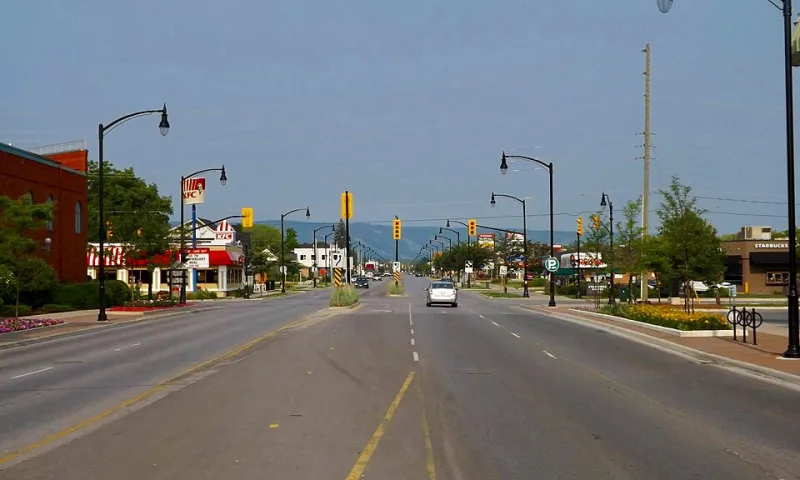
Photo: Qulat96, CC BY-SA 4.0, via Wikimedia Commons
When families move to New Canaan, they typically arrive with a clear picture of what they are getting: outstanding public schools, low crime, abundant green space, and a community that takes childhood seriously. What the real estate brochures do not include — and what veteran parents tend to share only in hushed tones at Waveny Park or over coffee on Elm Street — is the elaborate, largely unwritten social architecture that governs how children are raised here.
It is not unfriendly, and it is rarely malicious. But it is real, and understanding it early can make an enormous difference in how smoothly a family finds its footing.
School Involvement Is Not Optional — It Is a Signal
New Canaan's public schools consistently rank among the finest in Connecticut, and the community invests heavily in sustaining that reputation. Part of that investment is parental. Volunteering at school events, attending curriculum nights, and participating in the PTA are broadly understood not merely as gestures of goodwill but as indicators of how seriously a family takes its place in the community.
New parents sometimes assume that a demanding work schedule provides sufficient cover for limited involvement. It can — up to a point. But those who disengage entirely often find themselves gradually excluded from the informal information networks that matter: the text threads where parents share teacher insights, the quiet conversations before soccer pickup where school board priorities get decoded, and the social circles that form around classroom events.
The expectation is not that every parent must chair every committee. It is that presence, in some visible form, signals belonging.
The Activity Calendar as Social Currency
Outside the classroom, New Canaan's children tend to maintain schedules that would exhaust many adults. Lacrosse, swim team, tennis, travel soccer, coding camps, debate leagues, private music instruction — the list of available enrichment is genuinely impressive, and the pressure to populate a child's week with structured activities arrives earlier than most new parents anticipate.
What surprises many families is the degree to which these activities function as social infrastructure for parents, not just children. The sidelines of a Saturday lacrosse game or the waiting area of a dance studio are, in practice, among the most reliable venues for adult relationship-building in town. Families who opt out of organized activities — or who choose programs outside the dominant circuits — sometimes find themselves peripheral to the social conversations that happen in those spaces.
There is also a subtle hierarchy at work. Certain programs carry more social weight than others, and that weight shifts over time as cohorts age and community priorities evolve. New parents rarely arrive knowing which summer camp is considered the right one this year, or which travel sports program signals genuine commitment versus casual interest. That knowledge is transmitted informally, and acquiring it takes time.
The Summer Question
Summer in New Canaan is its own chapter entirely. The town's proximity to beaches, country clubs, and a range of prestigious overnight camps creates a seasonal landscape that can feel both abundant and quietly competitive. Families who have been here for generations often have established rhythms — the same camps, the same clubs, the same August traditions — that newer arrivals are still assembling.
For parents of younger children, the summer activity question arrives with surprising urgency. Day camps, specialty programs, and extended travel fill the calendars of many families well before Memorial Day. Those who wait, or who approach summer as unstructured by design, occasionally find their children socially adrift when peer groups reconvene in September with shared experiences that became new points of reference.
This is not to suggest that a quieter summer is without value — many thoughtful New Canaan parents make exactly that choice, deliberately. But making it consciously, with an understanding of the social dynamics involved, is different from stumbling into it unprepared.
Neighborhood Dynamics and the Art of Calibrated Presence
New Canaan's residential neighborhoods are, by most measures, exceptionally civil. Neighbors tend to be considerate, property is well maintained, and community standards are broadly observed. But civility and closeness are not the same thing, and new families sometimes misread one for the other.
The town has its own rhythm of socialization — block parties that happen on certain streets and not others, informal gatherings that require an implicit invitation, and social clusters that formed years before any newcomer arrived. Breaking into these networks takes patience and a degree of social attentiveness that the town's welcoming surface does not always telegraph.
Parents who arrive expecting warmth — and they will find it — should also prepare for the discovery that warmth and inclusion are extended on a timeline that the community, not the newcomer, controls. Families who push too hard for rapid integration can inadvertently signal a kind of social neediness that slows the very process they are trying to accelerate.
The Achievement Conversation
New Canaan parents generally want their children to succeed, and they are willing to invest substantially in making that happen. But the community's relationship with achievement is more nuanced than a simple drive toward excellence. There is a pervasive, if rarely articulated, understanding that certain kinds of success are worth celebrating publicly and others are best held closer.
Academic performance, athletic distinction, and admission to selective institutions are sources of genuine community pride. But the parents who navigate New Canaan's social landscape most gracefully tend to be those who celebrate their children's accomplishments without performing them — who understand that conspicuous ambition, as opposed to quiet achievement, can generate friction in a community that prizes a particular brand of understated confidence.
New parents who have come from more openly competitive environments sometimes find this calibration difficult to read at first. The town is not modest about excellence; it simply prefers that excellence speak for itself.
What Experienced Parents Wish They Had Known
Conversations with long-tenured New Canaan parents — those who have raised children here across a decade or more — tend to surface a few consistent observations.
First, the early years matter disproportionately. The friendships children form in elementary school, and the parental relationships that form alongside them, often define a family's social position for years. Families who invest in those early connections typically find the subsequent years easier to navigate.
Second, it is worth resisting the pressure to do everything. The activity landscape is rich enough that trying to participate in all of it produces exhaustion without proportional reward. Selectivity, applied early, tends to serve families better than broad participation.
Third, and perhaps most importantly: the community rewards authenticity over performance. New Canaan has seen enough families arrive with carefully constructed presentations of themselves to have developed a fairly acute collective sense for when a family is performing versus simply living. Those who settle in genuinely, bring their actual values with them, and engage without pretense tend to find the community opens to them more readily than those who arrive trying to fit a perceived mold.
Raising children in New Canaan is, by most objective measures, a remarkable privilege. The schools are excellent, the environment is safe, and the resources available to young people here are extraordinary. But like any community with a strong identity and a long institutional memory, it asks something of the families who join it — not conformity, exactly, but a kind of attentiveness to the culture that surrounds them. The families who thrive here are almost always the ones who arrive willing to learn that culture before they try to change it.