When the Commute Disappears: How Remote Work Is Quietly Rewriting New Canaan's Story
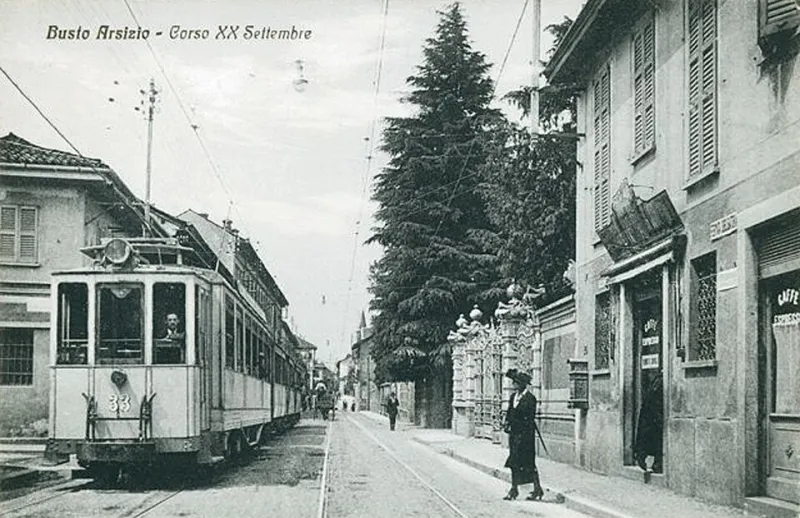
Photo: Unknown authorUnknown author, Public domain, via Wikimedia Commons
For most of the twentieth century, the rhythm of New Canaan was set by a train schedule. Fathers—and, in more recent decades, mothers—rose before dawn, poured coffee into travel mugs, and made their way down to the Metro-North platform on Elm Street. By 8 a.m., the town belonged to whoever remained: young children, stay-at-home parents, retirees, and the small army of local business owners who kept the downtown alive. By 6 p.m., the platform filled again, and the town exhaled.
That rhythm, so deeply embedded in New Canaan's civic and social DNA, has been disrupted in ways that few could have predicted five years ago. Remote and hybrid work arrangements, accelerated by the pandemic and now normalized across many industries, have fundamentally altered who is present in town, when they are present, and what they expect from the community around them. The consequences ripple outward in directions both welcome and unsettling.
A Different Kind of Downtown
Walk along Elm Street on a Tuesday morning in 2024, and the scene looks nothing like it did in 2018. Coffee shops that once served a narrow pre-commute rush now sustain steady business through midday. The sidewalks carry a mix of stroller-pushing parents, laptop-toting professionals in search of a change of scenery, and retirees who have always been part of the morning landscape but who now share it with an entirely new demographic.
Local business owners have noticed. The owner of a boutique coffee shop near the town center, who has operated in New Canaan for over a decade, described the shift in stark terms. "Before, I had a window," she said. "From about 6:45 to 8:15, the place was packed. Then it emptied out entirely. Now I have customers from open to close, but the volume at any single moment is different. It's steadier, but I had to rethink everything—staffing, inventory, even the furniture layout to accommodate people who want to sit and work."
Not every business has adapted as neatly. A handful of establishments that catered specifically to the commuter crowd—quick-service lunch spots, dry cleaners with early-morning drop-off windows—have struggled to reposition themselves for a clientele whose schedule is no longer dictated by train departures.
Real Estate and the Meaning of Space
Few sectors reflect the remote-work revolution more vividly than residential real estate. New Canaan's housing market, already competitive before the pandemic, entered a period of extraordinary demand as Manhattan professionals reconsidered their living arrangements. The calculus changed dramatically: if you no longer needed to be on a train five days a week, the extra square footage, the backyard, and the top-ranked school district suddenly justified the distance from the city in ways they had not before.
The town's median home prices climbed sharply between 2020 and 2022, and while the market has since moderated somewhat, the composition of buyers has shifted. A significant share of recent arrivals are not traditional commuters at all—they are fully remote workers, entrepreneurs, and dual-income households where one or both partners work exclusively from home. For them, New Canaan is not a launching pad to New York; it is the destination itself.
This distinction carries real consequences for community character. Longtime residents describe a subtle but perceptible change in how newcomers engage—or sometimes fail to engage—with the town's civic institutions. "When you commute, you build relationships at the station, on the train, at the local diner before the 7:42," said one resident who has lived in New Canaan for more than thirty years. "Those relationships fed into the PTA, the volunteer fire department, the library board. I'm not sure the new model produces that same connective tissue."
Civic Engagement: A New Variable
Whether remote work strengthens or weakens civic participation in New Canaan is a question that resists easy answers. On one hand, residents who spend their entire day in town have more opportunity to attend a Planning and Zoning meeting at 7 p.m., volunteer at a school event, or stop into a Town Council session. Physical presence in the community, some argue, naturally breeds investment in it.
On the other hand, those who work remotely often maintain strong professional and social ties to New York, Boston, or wherever their employer is headquartered. Their primary identity may remain anchored elsewhere, even as their physical address says New Canaan. The town's traditional civic organizations—the Rotary Club, the New Canaan Community Foundation, neighborhood associations—are actively grappling with how to attract and retain this newer population.
The New Canaan Library, long a civic anchor, has responded by expanding programming that speaks directly to the remote-work population: networking events for local professionals, co-working hours in its reading rooms, and speaker series that address entrepreneurship and career development. The institution's leadership has been candid about the intention behind these efforts—to create new points of entry for residents whose daily lives no longer funnel them through shared commuter spaces.
Identity at a Crossroads
New Canaan has always been, in the parlance of Connecticut real estate, a "destination town"—a place people choose deliberately, not by default. That intentionality is arguably even more pronounced today, when a fully remote worker could theoretically live anywhere in the country and chooses, nonetheless, to be here.
Yet the town's identity as a bedroom community for New York was never merely descriptive; it was constitutive. The commute shaped architecture (large station-area parking lots, a walkable downtown calibrated to the arriving and departing traveler), shaped commerce (businesses built around predictable daily rhythms), and shaped culture (a shared experience that created common ground among residents from wildly different professional backgrounds).
As that shared experience becomes less universal, New Canaan faces the task of articulating what it is for, rather than simply where it is relative to Grand Central. That is not a small question. It is, in many respects, the central civic question of the coming decade—one that will be answered not by any single town meeting or master plan, but by the accumulated daily choices of the people who live here, work here, and are deciding, in increasing numbers, that the two are now the same thing.
The 7:42 still runs. But for a growing share of New Canaan, the most important commute is the one from the kitchen to the home office—and the town is only beginning to understand what that means.