Chosen, Not Discovered: The Forces Pulling New Families to New Canaan and the Quiet Tensions That Follow

Photo: suburban neighborhood families moving Connecticut residential street, via autoimage.capitalone.com
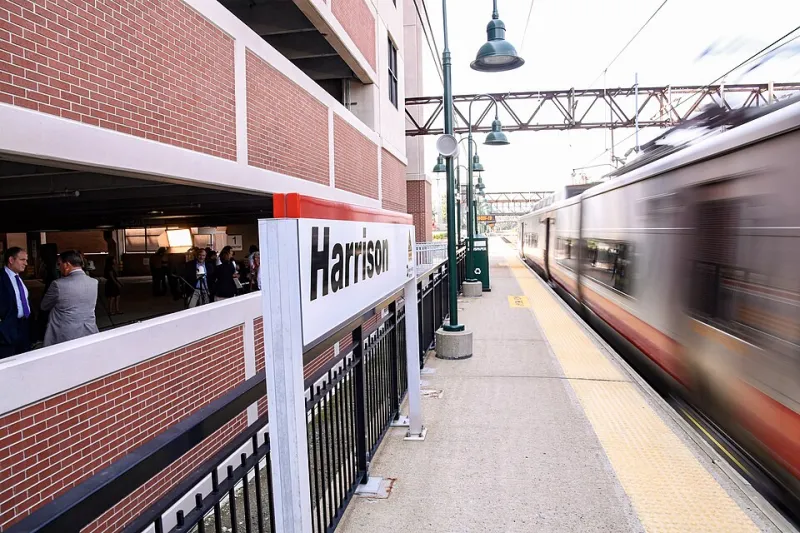
For most of its modern history, New Canaan operated on something close to word of mouth. A colleague mentioned it at a dinner party in Greenwich. A cousin passed along a school ranking. Someone's real estate agent dropped the name as an afterthought. The town did not need to advertise itself. It simply existed, quietly excellent, at the end of a Metro-North branch line.
That era of quiet self-sufficiency may be giving way to something more deliberate — and more complicated. A convergence of demographic pressures, remote-work flexibility, and hyper-targeted real estate research has turned New Canaan into an active destination rather than a passive discovery. The families arriving today are not stumbling in. They have done their homework, and the town they have chosen is changing, in subtle but measurable ways, as a result.
What the Numbers Suggest
Connecticut's post-pandemic residential real estate market produced some of the most dramatic migration shifts the state had seen in decades. Fairfield County, long a reliable draw for New York City professionals, saw inbound migration accelerate sharply between 2020 and 2023, with towns like Darien, Westport, and New Canaan absorbing a disproportionate share of the movement.
Within New Canaan specifically, median home sale prices climbed from approximately $1.3 million in early 2020 to well above $1.7 million by late 2023, according to data compiled from Connecticut's Multiple Listing Service. Inventory remained persistently tight — often under two months of supply — which real estate professionals in town describe as a seller's market that has shown little sign of cooling.
Perhaps more telling than price alone is the origin point of buyers. Local agents report that a significant share of recent transactions involve families relocating not from Manhattan or Brooklyn, as was historically common, but from other affluent suburban communities: Scarsdale and Bronxville in Westchester County, Montclair and Summit in New Jersey, and even comparable towns in Fairfield County itself. These are not first-time suburban converts. They are experienced suburban residents making a second, more considered choice.
The Research Behind the Relocation
Speak with families who have arrived in the past three years and a pattern emerges almost immediately. The decision to move to New Canaan was rarely impulsive.
"We spent about eight months looking," said one mother who relocated with her husband and two children from Summit, New Jersey, in the fall of 2022. "We had spreadsheets. Literally spreadsheets. Test scores, commute times, property tax rates, the ratio of town budget going to schools. New Canaan kept coming out near the top on almost every metric we tracked."
The New Canaan school system — consistently ranked among Connecticut's finest, with New Canaan High School regularly appearing on national lists of top public secondary schools — functions as a primary draw. But arrivals also cite factors that resist easy quantification: the walkable downtown, the ratio of green space to developed land, the perceived safety of the neighborhoods, and what several described as a sense that the town "takes care of itself."
For remote workers and hybrid professionals, the calculus includes one additional variable. With two or three days per week no longer requiring a Manhattan commute, the premium on proximity to Grand Central has softened. New Canaan, which sits at the end of a single-seat Metro-North branch, is no longer penalized by its relative distance. The town's character — residential, unhurried, architecturally distinguished — now reads as a feature rather than a compromise.
The Neighborhoods Drawing the Most Attention
Not all of New Canaan is absorbing new arrivals equally. Real estate professionals note that demand concentrates heavily in neighborhoods within comfortable walking distance of the elementary schools and the downtown core. Streets near Saxe Middle School and South School in particular have seen competitive bidding that would have seemed exceptional even five years ago.
The appeal of these neighborhoods extends beyond convenience. New arrivals describe a specific vision of town life — children walking to school, weekend mornings at Waveny Park, afternoons at the Vine Street farmers market — that aligns closely with what New Canaan's most accessible neighborhoods actually offer. The town's physical geography, compact and coherent in a way that many comparable Connecticut communities are not, makes that vision credible in a way it might not be elsewhere.
A Community Examining Itself
Longer-term residents observe the changes with reactions that range from genuine enthusiasm to something harder to name.
The enthusiasm is not difficult to understand. New investment in local businesses, a broadening of the volunteer base, and a general energy that accompanies growth all register as positives. Several residents who have lived in town for twenty years or more describe a downtown that feels more animated than it did a decade ago, with new restaurant concepts and retail arrivals filling spaces that once cycled through tenants.
The harder-to-name reaction is subtler. It surfaces in conversations about parking, about the pace of construction activity, about the character of social gatherings that now include faces no one quite recognizes yet. Some longtime residents speak of a town that is becoming, in their phrasing, "more transactional" — a place where people arrive with a checklist rather than a commitment, and where the depth of civic investment that sustained New Canaan's institutions for generations may not automatically transfer to a newer cohort.
That concern is not unique to New Canaan, and it is not necessarily borne out by evidence. Several recently arrived families are already deeply embedded in the town's civic life — serving on school committees, volunteering with the New Canaan Nature Center, joining the Beautification Committee. The instinct to participate, it turns out, is often part of what drew them here in the first place.
What Comes Next
The demographic shift now underway in New Canaan does not resolve neatly into crisis or celebration. It is, more accurately, a stress test of the qualities that made the town attractive to begin with.
If the school system remains well-funded and carefully managed, if the downtown retains its independent commercial character, if the volunteer infrastructure continues to function — then the arrival of thoughtful, civically minded families represents an addition rather than an alteration. If those foundations erode under the pressure of growth, demand, and rising costs, then the town risks becoming a victim of its own reputation.
The families choosing New Canaan today are betting on the former outcome. They have done the research. They believe the town can absorb them without losing what drew them here. Whether that confidence proves warranted will depend, in no small part, on whether the community they are joining chooses to welcome them into the work of sustaining it.
That, more than any spreadsheet, may be the variable that matters most.