Tracks, Timetables, and Tradeoffs: What Metro-North's Shifting Schedules Mean for New Canaan's Future
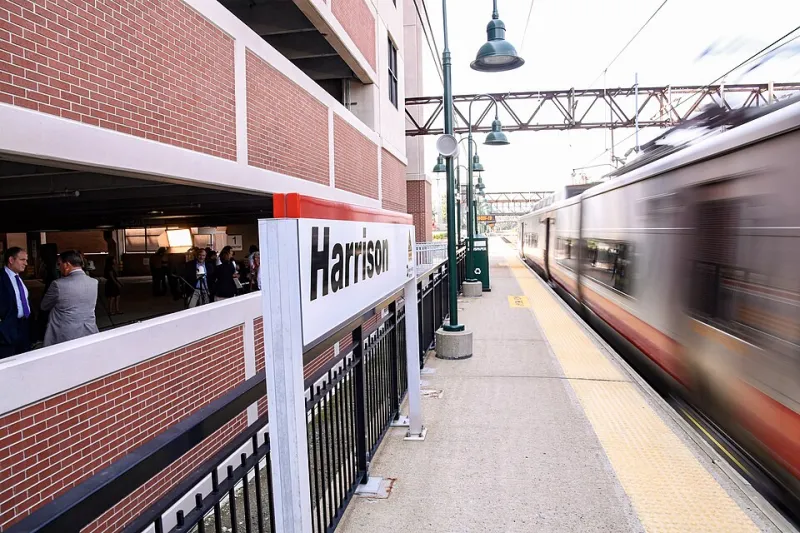
Photo: Metropolitan Transportation Authority of the State of New York from United States of America, CC BY 2.0, via Wikimedia Commons
For generations, the New Canaan Branch of Metro-North Railroad has functioned as something more than a transit line. It has been a covenant — an unspoken promise that a family could plant roots in one of Connecticut's most storied communities and still maintain meaningful access to New York City's professional economy. That covenant, many residents argue, is under growing strain.
Recent service adjustments along the branch, which terminates at the Elm Street station after splitting from the New Haven Line at Stamford, have prompted a quiet but consequential conversation among commuters, real estate professionals, and town officials alike. The question animating that conversation is deceptively simple: when train schedules shift, what else shifts with them?
A Branch Line With Outsized Importance
The New Canaan Branch carries a significance disproportionate to its modest three-stop length. Unlike riders on the mainline who benefit from express service and higher train frequency, New Canaan commuters are entirely dependent on a branch that requires a transfer at Stamford — a transfer whose timing can mean the difference between a tolerable commute and an exhausting one.
Metro-North's scheduling adjustments over recent years, including changes to off-peak frequencies and modifications to peak-hour departure windows, have not gone unnoticed by daily riders. Several commuters interviewed by The Daily New Canaan described a growing sense that the branch is treated as an afterthought within the broader system.
"When they adjust the New Haven Line schedule, we feel it immediately," said one Saxe Middle School-area resident who commutes to Midtown Manhattan four days a week. "A five-minute shift at Stamford can mean I miss my connection entirely and wait twenty minutes on a platform. That's not a minor inconvenience — that's a real cost."
Metro-North's public communications have framed recent changes as system-wide efficiency improvements, but critics contend that branch-line riders absorb a disproportionate share of the disruption.
The Housing Market Listens
Real estate professionals in New Canaan are among the most attentive observers of commute dynamics, and several have noted that transit access remains among the top three factors cited by prospective buyers — even in an era when remote work has theoretically diminished the daily commute's urgency.
"We still get buyers who walk the neighborhood and then ask specifically about the 7:42 to Stamford," said one local realtor, who asked not to be named due to professional sensitivities. "For a certain type of buyer — typically someone with a hybrid schedule who goes into the city two or three days a week — that train schedule is as important as the school district ranking."
The interplay between commute quality and home values in New Canaan is well-documented in regional housing research. Properties within comfortable walking distance of the Elm Street station have historically commanded a premium. But some agents suggest that premium is being quietly stress-tested as commute reliability becomes less predictable.
Conversely, a competing dynamic is also at work. The rise of hybrid and remote work arrangements has, for some buyers, reduced the weight they assign to transit access. Families who commute only two days a week may be more tolerant of an imperfect schedule than those who once boarded the 6:15 every weekday morning without exception.
Demographic Signals Worth Watching
Transit accessibility has long functioned as an informal filter in New Canaan's demographic composition. The town has historically attracted a particular professional archetype: the finance, law, or consulting executive willing to absorb a 60- to 75-minute commute in exchange for top-tier public schools, low density, and a genuinely walkable downtown.
There are early indications that this calculus is evolving. Younger professionals — particularly those in industries where remote work is structurally embedded — are increasingly weighing New Canaan against communities with stronger road-based access to major employment corridors, or against towns served by more frequent mainline stops.
At the same time, established residents who have reduced their commuting frequency report a deepened appreciation for the town itself. Several long-term homeowners described spending more time at Waveny Park, patronizing Main Street businesses on weekday afternoons, and becoming more active in local civic organizations — patterns that suggest a community growing more present within its own borders.
"The commute used to define my relationship with this town," reflected one resident who transitioned to a fully remote role in 2022. "Now I actually live here, rather than just sleeping here. I notice things I never noticed before."
The Infrastructure Question
Beyond scheduling, residents and local officials have raised longer-term concerns about infrastructure investment in the branch. The Elm Street station, while charming in its small-town way, lacks the amenities and capacity of larger Metro-North facilities. Parking availability during peak periods is a recurring frustration, and accessibility upgrades have lagged behind those at higher-traffic stations.
First Selectman's office representatives have indicated that advocacy for branch-line investment remains an active priority in the town's communications with the Connecticut Department of Transportation and Metro-North's parent agency, the MTA. But municipal leverage over a state and regional transit authority is inherently limited, and residents have learned to temper their expectations accordingly.
State legislators representing the district have periodically raised the branch's needs in Hartford, with mixed results. Funding for rail infrastructure in Connecticut tends to flow toward the most heavily trafficked corridors, leaving branch lines like New Canaan's perpetually competing for a smaller share of available resources.
What Comes Next
The conversation about commute quality in New Canaan is, at its core, a conversation about identity. The town has always defined itself in part through its relationship with New York City — close enough to participate in the metropolitan economy, far enough to maintain a genuine sense of community independence. The train line is the physical expression of that balance.
If that balance tips — whether through degraded service, demographic shifts, or the continued normalization of remote work — the effects will register not just on commuter platforms but in school enrollment figures, tax base projections, and the texture of daily life along Elm Street.
For now, most residents remain committed to the community they have chosen, even as they adapt to the terms of a commute that no longer looks quite the way it once did. The trains still run. The platform still fills at dawn. And New Canaan, as it always has, continues to negotiate its place between two worlds.
The Daily New Canaan will continue to monitor Metro-North service developments and their impact on the New Canaan Branch. Residents with commuting concerns or experiences to share are encouraged to contact our editorial team.