Twenty-Nine Million Reasons to Disagree: What the Library Renovation Battle Tells Us About New Canaan
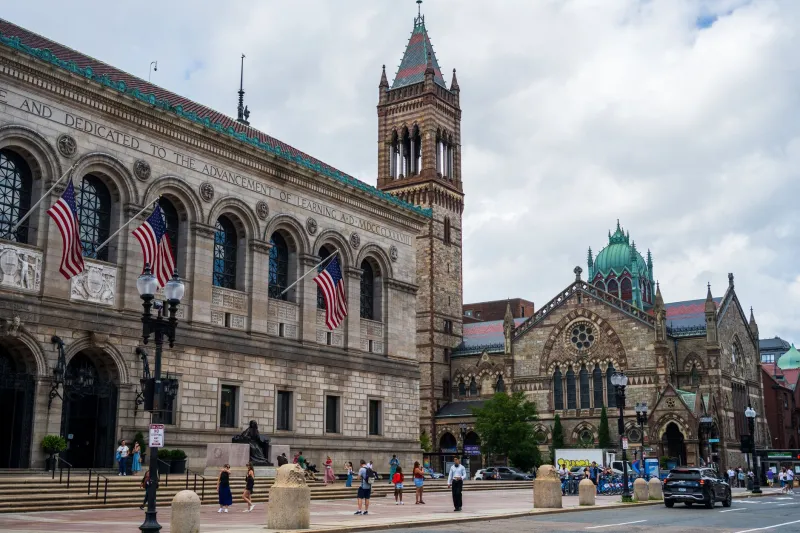
On most days, the New Canaan Library on Main Street operates with quiet efficiency. Patrons browse the stacks, children attend story hours, and teenagers occupy the study tables with the focused intensity of students who have nowhere else to be. Nothing about the building's daily rhythms suggests it is at the center of one of the most contested civic debates New Canaan has seen in years.
And yet, a proposed renovation and expansion project carrying a price tag of approximately $29 million has fractured the town along lines that have little to do with architecture and everything to do with competing visions of what New Canaan is, and what it should become.
The Proposal on the Table
The library's leadership and its board of directors have spent several years developing plans to modernize the existing facility, expand usable square footage, improve accessibility, and reimagine the building as a genuine community hub rather than simply a repository for books and periodicals. Proponents describe the project as long overdue—an acknowledgment that the current structure no longer meets the demands placed upon it by a growing and increasingly diverse population.
The renovations would include updated technology infrastructure, expanded programming spaces, improved children's and teen sections, and enhanced gathering areas designed to serve community groups, nonprofits, and civic organizations. In the language of library planning, it is described as a transformation from a transactional institution into a community anchor.
The funding mechanism involves a combination of private donations, a capital campaign already underway, and a request for municipal support—which is where the conversation has grown complicated.
The Case for Investment
Among the project's most vocal advocates are parents of young children, educators, and longtime residents who view the library as one of the few genuinely democratic spaces in a town where most social life is organized around private clubs, private schools, and private homes.
"The library is the one place in New Canaan where you don't need a membership, a tuition payment, or a dinner reservation," said one parent who attended a recent community information session. "If we're serious about being a community and not just a collection of households, this is where that commitment gets tested."
Supporters also point to the economic logic of the investment. Modern library facilities, they argue, attract younger families and support property values. Several neighboring towns have undertaken similar projects in recent years, and advocates are wary of New Canaan falling behind in the competition for civic infrastructure quality.
The library's existing programming numbers are frequently cited in this argument. Attendance figures, program enrollment, and digital resource usage have all climbed steadily over the past decade, straining a building that was not designed to accommodate contemporary expectations.
The Skeptics' Ledger
Opposition to the project is neither monolithic nor simple. Critics range from fiscal conservatives who question the scale of the expenditure to residents who support the library's mission but believe the current proposal exceeds what the institution genuinely needs.
Some skeptics are particularly focused on the municipal funding component, arguing that property tax dollars should not be directed toward what is, in their view, a privately governed institution. Others question whether $29 million represents the right allocation of community resources at a moment when the town faces competing infrastructure demands.
"I use the library. My kids use the library. I want it to be excellent," said one resident who asked not to be identified by name. "But I also think we owe it to taxpayers to ask whether this is the best use of that level of investment right now, or whether we're letting the momentum of a capital campaign substitute for a genuine cost-benefit analysis."
A separate strand of skepticism comes from residents who are skeptical of the project's underlying premise—that a dramatically larger, more program-dense library is what the community actually wants. Some argue that the quieter, more intimate character of the existing building is itself a feature rather than a limitation.
A Generational Fault Line
Perhaps the most revealing dimension of the debate is the degree to which it has exposed generational differences in how New Canaan residents conceive of public space.
Older residents who have lived in town for decades tend to speak of the library in terms of its existing character—a place of quiet scholarship and community familiarity. Many are skeptical of the expansion's more programmatic ambitions, which they associate with a trend toward turning civic institutions into entertainment and activity centers.
Younger families, by contrast, are more likely to describe the library in terms of what they wish it could be—a space that competes with the pull of screens and scheduled activities by offering something genuinely compelling. For this cohort, the renovation is not about replacing the library's identity but about making it relevant to children and teenagers who have many other options for their attention.
This divide is not unique to New Canaan. Communities across the country are wrestling with what the public library should be in an era when its original function—providing access to books and information—has been partially displaced by technology. The answers vary, and they tend to reflect the values of whoever is doing the asking.
What the Fight Is Really About
Strip away the specifics of the architectural plans and the funding formulas, and the library debate is a proxy for a larger question that New Canaan has been quietly circling for years: What is this town's obligation to its collective life?
New Canaan has long been defined by its private excellence—its schools, its homes, its professional culture. The library represents something different: a space that belongs to everyone, funded by everyone, and responsible to everyone. How the town chooses to invest in that space—or decline to—will say something consequential about where its priorities actually reside.
The capital campaign continues. Town meetings are ongoing. And the building on Main Street keeps its doors open, serving the community it has served for generations, waiting to learn what that community has decided it deserves.