Gone for the Season: The Annual Departure That Defines New Canaan's Summer Identity
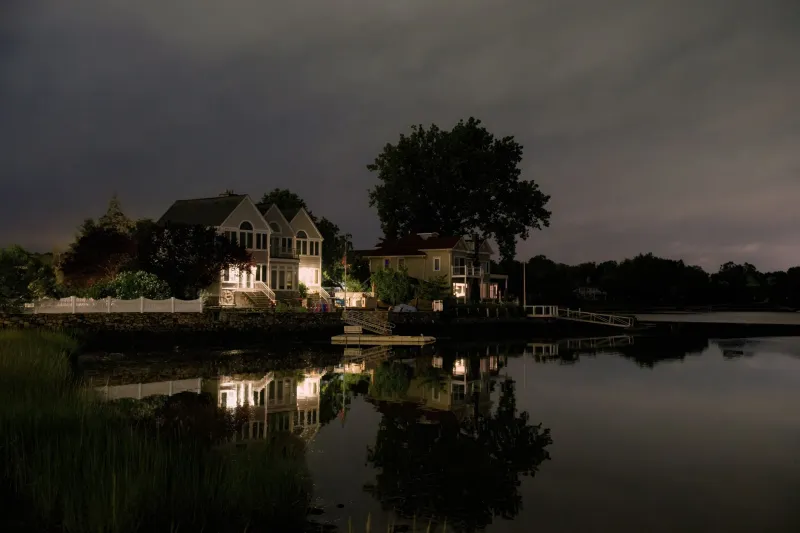
Sometime in the second week of June, a familiar stillness begins to settle over New Canaan. The school parking lots empty. The youth lacrosse fields go quiet. The line at Saxby's shortens. Neighbors who have been a constant presence since September begin to disappear, one household at a time, until the town achieves a kind of suspended state—present but not quite inhabited, beautiful but not quite busy.
This is New Canaan in summer. And understanding where its residents go—and why, and at what cost, and with what expectations—offers a surprisingly clear window into what the community values most.
The Geography of the New Canaan Summer
For a town of roughly 20,000 people, New Canaan generates a remarkably dispersed summer footprint. Conversations with residents, combined with observations of the town's seasonal rhythms, suggest several dominant patterns.
The most prevalent is the summer camp migration. New Canaan families send children to overnight camps in Maine, New Hampshire, Vermont, and the Berkshires at rates that reflect both the town's affluence and its deeply embedded belief in structured, supervised enrichment. Many of these camps carry tuitions that rival a semester of college, and enrollment is treated with a seriousness—wait lists, legacy preferences, early application deadlines—that mirrors the private school admissions process.
Parallel to the camp migration is the coastal retreat. Nantucket, Martha's Vineyard, Watch Hill, and the shoreline communities of southern Connecticut absorb a significant portion of New Canaan's summer population. Some families maintain seasonal properties; others rent, at prices that have climbed sharply in recent years. These destinations function as extensions of the New Canaan social world—communities within communities, where the same families encounter each other in a different setting and continue the social relationships that define their lives in town.
A smaller but conspicuous cohort travels internationally—Europe in July, extended itineraries that double as educational experiences, gap-year-style adventures for older teenagers. These departures tend to be discussed with a particular kind of purposeful casualness, as if the extraordinary were routine.
What Stays Behind
The more revealing question, in some respects, is not where New Canaan's families go but who remains. The town's summer population is not zero—it is simply different.
Residents who work in industries that do not accommodate extended absences, families for whom the cost of seasonal relocation is prohibitive, and households whose children attend local day programs rather than residential camps are all present through the summer months. For this population, the town's seasonal emptiness can feel less like a shared ritual and more like a reminder of a social divide that the school year partially obscures.
Local business owners and service providers navigate a summer economy that is genuinely leaner. Several Main Street establishments report meaningfully lower revenues between June and August. The restaurants, shops, and service businesses that depend on the daily density of New Canaan's resident population feel the absence acutely.
The town's municipal services continue, of course. Town Hall does not go on hiatus. But the civic energy that animates New Canaan during the school year—the committee meetings, the volunteer organizations, the informal social infrastructure—operates at reduced intensity.
The Achievement Logic of Summer
What is perhaps most distinctive about New Canaan's approach to summer is the degree to which leisure is organized around productivity. Even departure is purposeful.
Summer camps are selected not merely for their recreational offerings but for their reputational value, their alumni networks, and the skills—athletic, artistic, social—they are expected to cultivate. International travel is framed in terms of cultural exposure and broadened perspective. Even beach vacations are often structured around sailing lessons, tennis clinics, or academic enrichment programs.
This is not unique to New Canaan—it reflects a broader cultural shift in how upper-middle-class American families approach unstructured time. But the town's particular concentration of high-achieving, outcome-oriented households gives the phenomenon an intensity that residents themselves sometimes remark upon.
"I caught myself telling someone that my son was at a leadership program in Maine," said one parent who was candid about the absurdity of the framing. "He's ten. He's at camp. He's swimming in a lake. But somehow that wasn't enough to say."
The Economics of Going Away
The financial dimension of New Canaan's summer migration is significant and unevenly distributed. Overnight camp tuitions, seasonal rental costs, and international travel expenses represent a substantial portion of many families' annual discretionary budgets—and for some, they represent an aspiration that outpaces the budget available to support it.
The pressure to participate in the town's summer rituals, even when doing so requires financial strain, mirrors the dynamics of the school year. Families who cannot send children to the expected camps, or who spend the summer largely in New Canaan, sometimes report a mild social dissonance—a sense of being out of step with the community's expectations, even when those expectations are never explicitly stated.
This dynamic has policy implications that the town has been slow to address. Summer enrichment programs with meaningful financial assistance, expanded public programming for children who remain in town, and a more deliberate investment in the summer experience of families who cannot afford seasonal migration would all represent meaningful interventions. They would also require an honest acknowledgment that the summer exodus, for all its cultural coherence, leaves some residents behind.
Reading the Departure
A town is, in some sense, most legible when it is least populated. The patterns of New Canaan's summer departure—where families go, how they spend their resources, what they choose to optimize for—reflect priorities that the busy, structured school year can obscure.
The town values achievement, even in rest. It values community, but in forms that require significant financial access. It values its children's development with an intensity that occasionally struggles to distinguish enrichment from pressure.
None of this is surprising, and none of it is entirely problematic. But as New Canaan continues to evolve—as its demographics shift, its economic diversity grows, and its civic identity is renegotiated—the question of who belongs to the town's summer story, and on what terms, seems worth asking more directly.
The families will return in late August, tanned and ready for the school year. The town will fill back up. And the conversation about what summer in New Canaan should mean—for everyone who lives here—will, with any luck, continue.